About
Contents
About
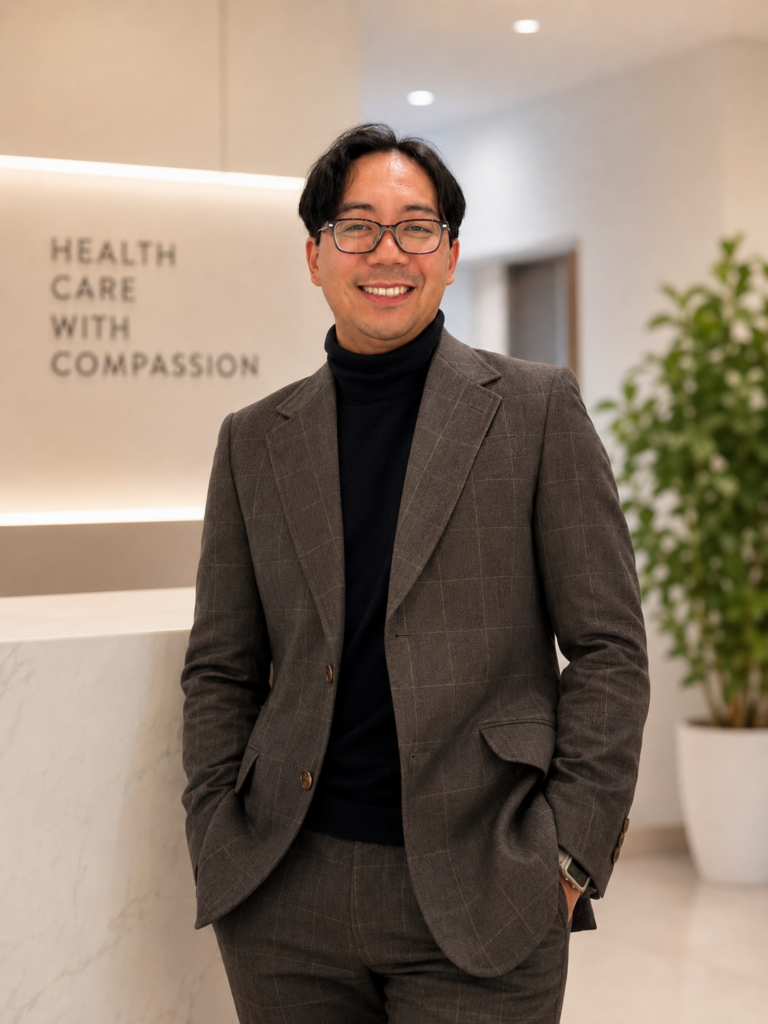
Henry Del Rosario is a full-spectrum academic family physician, clinical informaticist, and point-of-care ultrasound (POCUS) educator whose work bridges medicine, technology, and the humanities. Born in Chicago, Illinois to Filipino immigrants, he double-majored in Molecular & Cellular Biology and English at the University of Illinois at Urbana-Champaign before earning his Doctor of Medicine from Chicago Medical School at Rosalind Franklin University of Medicine & Science. He completed residency training at the West Suburban Family Medicine Residency Program, where he developed a passion for full-spectrum family medicine rooted in service, teaching, and community care.
In 2017, Henry moved with his wife to Rhode Island and joined the UMass Department of Family Medicine and Community Health, where he serves as an Assistant Professor and academic family physician. His clinical practice spans outpatient primary care, inpatient adult hospital medicine, prenatal care, labor and delivery, and resident education— a scope he believes reflects the unique beauty of family medicine: caring for patients across generations, settings, and seasons of life.
Henry has particular interests in evidence-based primary care, bedside teaching, research, and the growing role of point-of-care ultrasound in family medicine. He serves as a POCUS educator and ultrasound site instructor and is actively developing educational curricula, workshops, and research focused on how family physicians can safely and effectively integrate ultrasound into everyday clinical practice. His current research explores the feasibility and diagnostic accuracy of family physician: POCUS for conditions such as pneumonia, abdominal aortic aneurysm screening, deep vein thrombosis, and other diagnostic pathways in primary care. He is especially interested in practical models of ultrasound education that empower busy clinicians and trainees to learn new skills sustainably and thoughtfully.
Alongside his clinical and educational work, Henry is deeply involved in clinical informatics and physician workflow improvement. As an Epic physician builder and faculty leader in electronic medical record optimization, he develops tools, workflows, and educational initiatives aimed at improving efficiency, reducing burnout, and helping physicians reclaim time for patients, family, and meaningful work. He founded the UMass version of the “Home for Dinner” initiative, an individualized coaching and educational program designed to help physicians develop mastery and confidence within the electronic medical record while decreasing after-hours charting burden. His work is now involved in training residents and attendings to stay abreast with the quickly evolving AI tool landscape.
Throughout his career, Henry has remained committed to the belief that medicine is both a science and a profoundly human art. His work in photography, poetry, writing, and narrative medicine reflects an ongoing fascination with the intimate, vulnerable, and beautiful moments physicians are privileged to witness. Whether teaching residents, caring for hospitalized patients, scanning with an ultrasound probe, building systems within the electronic medical record, or documenting the lives of frontline workers through photography, he sees medicine as a calling grounded in curiosity, creativity, and service.
For Henry, there are still three desires he hopes to fulfill with his short life: to explore, to create, and to serve.
Artist Statement
I am a person of dual experiences: Asian and American, Artist and Doctor, Sinner and God-saved. My artwork focuses on my questions about identity:
- How does being Asian and American affect artistic mediums and tools?
- Can art heal? Can medicine have a meaningful aesthetic?
- Does prayer, meditation, and mindfulness have a place in medicine and art?
Art deconstructs and constructs what is beautiful. Medicine deconstructs and constructs what is sick. My work explores meditation and prayerfulness as common ground between art and medicine. In particular, I use ink and calligraphy (graphemes) and the words they represent (phonemes) as a starting point to explore how art and medicine react to each other. Historically, calligraphy has been used to record and copy scriptures— intimately tied to Buddhism, Taoism, and Zen. There are increasing studies being done now in medicine about mindfulness and meditation. I have a feeling that the self-examination I do when seeing patients and the need for patients to be self-aware in their own health are related to the self-reflection done in art and calligraphy. Moreover, self-examination can reveal structural and personal depravities. America’s social problems of race, the decolonization of the Philippines, and globalization are themes I investigate in my works.
Hobbies + Interests
Art (calligraphy, photography), growing indoor houseplants, writing, Alfred Hitchcock films, Anime, traveling, reading biographies, learning languages
Contact

Links
Leave a Reply